Let the Campaigning End and the (Mc)Governing Begin

These days of so much  political vitriol being directed at whoever is not on the side of the vitriol-spewer, makes it easy to turn away from the negativity and forget that it doesn’t have to be this way.

I can even forgive our younger citizens for wondering what the founding fathers were thinking when they created Congress as a deliberative body that would actually make laws to govern and, hopefully, provide for the general welfare of its citizens.  After all, we’ve all witnessed the last four years of a mostly gridlocked Congress, divided between the party who believes Barack Obama is our rightful president and the other whose goal is to question his legitimacy and wage the 2012 presidential campaign.

Those of us still tuned in have seen a tragicomedy of a President seeking to find a bi-partisan compromise by advocating the other side’s ideas, only to find that side quickly jumping away from an  idea they re-brand as downright socialistic.  And the idea of negotiation involving some giving and taking in order to reach an acceptable compromise?  Compromise is now a treasonous offense in some books and the term “negotiation” has been redefined to mean “demand everything you want and, whatever you do, do not budge.”

Last weekend, courtesy of a talk by George Bristol at the Texas Book Festival, I was reminded of the days when Congress was functional, members treated each other, and the President, with respect, and worked together to hammer out compromises and legislation that would benefit the people of this country, not political positions.  Some of you will remember how it was: one member of Congress would vote for legislation sponsored by another member on the opposing side of the aisle in exchange for help with his own sponsored legislation.  We call it horse tradin’ in this part of the country.  It used to be called negotiation.

George Bristol had a front row seat to this phenomenon, working most of his adult life for politicians in Washington and Texas.  Although he came to talk about the preservation of our parklands and the political realities of those efforts, at some point, an audience member asked him to share his thoughts about the loss of civility in Congress.  Mr. Bristol noted, without a certain amount of sadness, that the people inhabiting public office today are

simply a different breed.  He explained that men like Jake Pickle, Bob Dole, Hubert Humphrey, George McGovern, and Lloyd Bentsen were individuals who may have differed politically, but they shared some important traits that allowed for the kind of civility we used to see in Congress.  Specifically, these men had lived through the depression and most had fought in WW II, many with the lifelong scars of this commitment to their country.  Accordingly, when they sat down to talk about legislation, they had a genuine respect for one another – the respect of having endured the same hardships.

To prove his point, he referred us to former Senator Bob Dole’s letter in tribute to George McGovern, the former Democratic U.S. Senator who died last week at the age of 90.  After I got home, I found the letter.

I never thought I’d thank Bob Dole for anything, but his words are a wonderful gift to all of us who hunger for dignity and respect among our public officials.  I share with you Senator Dole’s letter:

George McGovern, the Man Who Never Gave up
by BOB DOLE , Special to the Washington Post.  October 22, 2012

When I learned that George McGovern was nearing the end of his remarkable life, I couldn’t help but think back to the day in June 1993 when both of us attended the funeral of former first lady Pat Nixon, in Yorba Linda, Calif.  After the service, George was asked by a reporter why he should honor the wife of the man whose alleged dirty tricks had kept him out of the White House. He replied, “You can’t keep on campaigning forever.”

That classy remark was typical of George, a true gentleman who was one of the finest public servants I had the privilege to know.

I am sure there are some who were surprised by the long friendship that George and I shared. After all, before his death this weekend at age 90, he was a proud and unapologetic liberal Democrat and I am a lifelong Republican. As chairman of the Republican Party, I did what I could to ensure the defeat of his 1972 run for the White House. When the election was over, however, George and I knew that we couldn’t keep on campaigning forever. We also knew that what we had in common was far more important than our different political philosophies.

Both of us were guided by the values we learned growing up in the plains of the Midwest – he in Mitchell, S.D., and me in Russell, Kan.  Our lives were also transformed by the experience of wearing the uniform of our country during World War II.

We would both come to understand that our most important commonality – the one that would unite us during and after our service on Capitol Hill – was our shared desire to eliminate hunger in this country and around the world. As colleagues in the 1970s on the Senate Hunger and Human Needs Committee, we worked together to reform the Food Stamp Program, expand the domestic school lunch program and establish the Special Supplemental Program for Women, Infants, and Children.

More than a quarter-century later, with political ambitions long behind us, we joined together again. Soon after President Bill Clinton named George ambassador to the U.N. Food and Agriculture Organization in 1998, he called to ask for my help in strengthening global school feeding, nutrition and education programs. We jointly proposed a program to provide poor children with meals at schools in countries throughout Africa, Asia, Latin America and Eastern Europe.

In 2000, President Clinton authorized a two-year pilot program based on our proposal, and in 2002, Congress passed and President George W. Bush signed into law the McGovern-Dole International Food for Education and Child Nutrition Program. Since its inception, the program has provided meals to 22 million children in 41 countries.

In recent years, George and I had several occasions to get together and reflect on our lives, our political careers and our respective presidential campaigns. No matter how many times we replayed it, he never did defeat President Nixon and I never did defeat Bill Clinton. We agreed, however, that the greatest of life’s blessings cannot be counted in electoral votes.

In 2008, George and I were humbled to be named the co-recipients of the World Food Prize. As we were called on stage to accept the award, we once again reached across the aisle, walking to the podium literally arm-in-arm. I began my acceptance remarks by saying that “The good news is that we finally won something. It proves that you should never give up.”
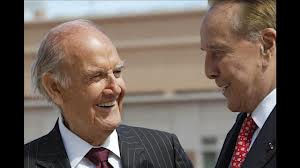
There can be no doubt that throughout his half-century career in the public arena, George McGovern never gave up on his principles or in his determination to call our nation to a higher plane. America and the world are far the better because of him.

Rest in peace, Senator McGovern.  Thanks, Senator Dole, for reminding us of the good that can be accomplished once our political leaders take down the campaign banners.


Posted in Politics | Tagged , , , , , , | 2 Comments

Coming to a Screen Near You: A Taxing Drama

With the upcoming premiere of the 2013 legislative session, we’re beginning to see trailers of this biennial blockbuster featuring a cast of characters who will craft a budget that will either cripple public services and education or save us from Big Brother and any need to think for yourself, depending on your viewpoint.

Whichever way you see it, it’s guaranteed to be a contentious drama, pitting those who choose to fund government to compete in the 21st century against those who want to drown it in the bathtub.  We may even see the Legislature having to revamp their revamp of the franchise tax, known as the business-margins tax.  This depends on what the Texas Supreme Court rules in the next few months concerning the constitutionality of that tax.

In the event of a revamp, we’ll be on the edge of our seats, I’m sure, watching lawmakers pretzel themselves into adopting some solution that doesn’t walk or talk like an income tax.  On the other hand, we’re accustomed to this two-step around the income tax, as lawmakers shuffle around the floor with more occupation and higher sales taxes.  After all, the word “income tax” is the kiss of death for Texas politicians.  That’s why we live in a state where over 55%  of state revenues are raised by a regressive sales tax.  Counties, municipalities and other special tax districts raise a big chunk of change from the 2% in sales tax they add on to the 6.25% state tax.

But no matter how many times we dance around with our tax structure, it never gets easier:   there is always much gnashing of teeth and avoidance of the reality that government programs – the kind that separate us from third world countries and our frontier origins – need funding.  Thus, every two years I am reminded that the more things change . . . the more they don’t.

Take 1875, for example.  That year, elected delegates to the Constitutional Convention came to Austin to write a constitution to replace the Reconstruction constitution and any remnant of that government, known for its corruption.  Reconstruction ended, leaving a bad taste in the mouth of citizens who had felt unfairly taxed by the carpetbagger government and an economy in severe economic depression.  With government coffers suffering, delegates didn’t even allocate funds to hire stenographers as previous conventions had done.

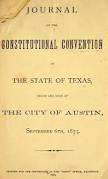
In fact, the only reason I can tell you about convention floor debates was that various newspapers across the state sent reporters to cover the events in Austin and they often published detailed accounts of what the delegates said.  In turn, these accounts were gathered and compiled into book form by Dr. Seth Shepard McKay, history professor at Texas Tech, whose book Debates in the Texas Constitutional Convention of 1875 was published in 1930.  Without these, all we would have is the convention journal including the various versions of the constitutional articles, the amendments that were offered, records of committee and floor votes, along with some miscellaneous information.

What we see from these sources is a group of men – mostly members of the Granger (primarily farmer) movement  – seeking to curtail the power of the government to tax.  Many of the delegates had their sights set on the occupation tax, apparently make quite unpopular by the Reconstruction government.  In contrast, current occupation taxes have been enacted with little ado.  Today, we have taxes on individuals engaged in oil well services, attorneys, importers, bondsmen, owners of coin-operated machines, and even the franchise tax (a tax on businesses), to name a few.

But, so unpopular was the occupation tax in 1875, that Sections 1 and 2 of the Taxation article (Art. VII), as initially introduced and passed by the Revenue and Taxation committee, was written to impose the tax only as a deterrent to immoral activities:

    Section 1.  Taxation in this state, as a rule, shall be equal and uniform, and this general principle shall only be departed from in cases of great public emergency, or for the purpose of repressing occupations deemed adverse to the god [sic] of society.
    Section 2.  Occupation taxes, being in their nature an infringement upon natural rights of persons, shall be laid only to discourage pursuits immoral in their tendency or not strictly useful, or as a discrimination against itinerant traders.

Citizens from Brazoria County also chimed in about the occupation tax, passing a resolution that was printed in the convention journal.  Their message to the convention requested a vote “against any license law discriminating against occupation and professions, and urging the imposition only of equal and uniform taxation.”

Voices against the tax rang out loud and clear on the convention floor.  One supporter of the committee’s version of Article VII explained that “For years, at every political meeting on the stump, the cry had been ‘relief, relief’ against that occupation tax.”   Other delegates pointed to the current economic depression and speculated that occupation taxes would exacerbate the situation by being passed on to consumers in the form of higher prices.  This pass-through phenomenon, it was said, made occupation taxes an unequal and deceptive form of taxation, “wanting in the elements of truth and direct action that should always characterize the solemn and grave enactments of a legislative body.”

The tax was even denounced as a “tax on brains” that discriminated against “the poor lawyer and doctor who had not a cent at the end of the year and could not do more than pay their board.”  One delegate claimed that an occupation tax worked unequally, unlike an income tax that would apply to all citizens.

But, cooler heads on the floor suggested that the tax was not inherently ruinous and “it might be safely left to the legislature to grade taxation so as to make the burdens equal and uniform.”  Furthermore, declared another, it would be unfair not to impose an occupation tax on professionals.  Analogizing professional knowledge to working capital, which was taxed as property, he contended that exempting professionals from occupation taxes would be tantamount to the creation of a privileged class.

Fletcher Stockdale

A more practical argument in favor of occupation taxes was advanced by Fletcher S. Stockdale, one of the few delegates with substantial government experience.  Stockdale noted that occupation taxes contributed from $400,000 to $500,000 to the state treasury.  Moreover, observed another supporter, that amount might become an even larger source of revenue under a more efficient and honest government than the one before.

Pragmatist Stockdale also pointed out the difficulty in authorizing taxation of occupations that were “odious.”   Such a provision, he noted, would require the legislature to distinguish between moral and immoral occupations, in essence, making the legislature a judge of morality.  In agreement, Delegate Judge John H. Reagan stated that he would be most unwilling to trust questions of morality and ethics to the legislature.

The convention, however, never voted on the morality provision for occupation taxes or any other provision in the committee majority’s version.   Instead,  Delegate James Fleming, offered the tax committee’s minority report as a complete substitute for the majority report.  The rankled Committee chairman complained vociferously that Fleming and Stockdale had been swayed by “special interests,” but the substitute was approved by delegates by an overwhelmingly vote of 58 to 16.

As debate proceeded on the substitute, little of the original sections 1 and 2 survived other than the equal and uniform provision. Article VII was amended on the convention floor by adopting specific provisions to section 1 for property, income, occupation, and poll taxes.  Ultimately, it read:

Taxation shall be equal and uniform. All property in this State, whether owned by natural persons or corporations, other than municipal, shall be taxed in proportion to its value. . . The Legislature may impose a poll tax. It may also impose occupation taxes, both upon natural persons and upon corporations. . . doing any business in this State. It may also tax incomes of both natural persons and corporations. . . except that persons engaged in mechanical and agricultural pursuits shall never be required to pay an occupation tax. . .

Much more was discussed in regard to Article VII – which I hope you will let me tell you about some day – all proving how difficult it is to reach consensus on taxation.  In this case, final passage of the tax article was probably facilitated by the last line of the excerpt printed above, i.e., that those involved in agriculture (like those of the Granger persuasion) would be exempted from ever paying an occupation tax.

But, I hear you saying, what did the delegates say about income taxes?  What about that horrible, monstrous income tax???!!!  I hate to disappoint, readers, but the delegates seemed to think the income tax was hunky dory.  And maybe that’s just a sign of the times – they didn’t have much income, but they sure had occupations.  Moreover, they didn’t have any experience with a federal income tax to make them go into Pavlovian spasms every time they heard “income tax.”

But, looking ahead, whatever the 2013 Legislature does in regard to taxes, it’s a safe bet that nothing has changed since 1875.  We’ll hear a lot of political stump speeches, posturing, the sky-is-falling predictions, as whichever grown-ups are left in the Leg try to find a solution to the mess we’ve created for ourselves.  A lot of horse trading will occur, and no one will be particularly happy with the results.  It’s to be expected.  After all, death and taxes are the only true certainties of life, neither of which we want to contemplate or experience.

Posted in Uncategorized | Tagged , , , , , , , , , , , | Leave a comment

R-E-S-P-E-C-T, Find Out What it Means to Me

Clare McCaskill

Although the R’s keep stressing that this election is about the economy, women’s reproductive rights and access to health care keep running out on the battlefield.  As everyone has probably heard by now, Missouri U.S. Senate candidate, Todd Akin (R) expressed his belief in a bizarre bit of health news – at least it was news to us.  He explained that he’d heard that women have a magical form of birth control that prevents a pregnancy when she is legitimately raped.   Whatever the craziness of the biology, surely we can agree that a term that pairs the word “legitimate” with the word “rape” should be declared illegal or, at least, disqualify the utterer from ever running for public office.  Thankfully, Missourians have an option to vote against him and for Clare McCaskill, a woman with a firm grasp on her own biology.

And the selection of Paul Ryan as a running mate can hard quell the concerns of many women in this country about the R stance on reproduction.  He was the co-author with the previously-mentioned Akin of a bill that made a distinction between forcible rape and the rape of a non-forcible variety.  Are they trying to say that rape can be consensual?  I have to wonder about their English-speaking credentials since the definitions the dictionary lists are: 1) the unlawful compelling of a person through physical force or duress to have sexual intercourse; 2) any act of sexual intercourse that is forced upon a person.  In other words, non-forcible rape is an oxymoron.   Rape minus force equals consensual intercourse or what many call, a roll in the hay.

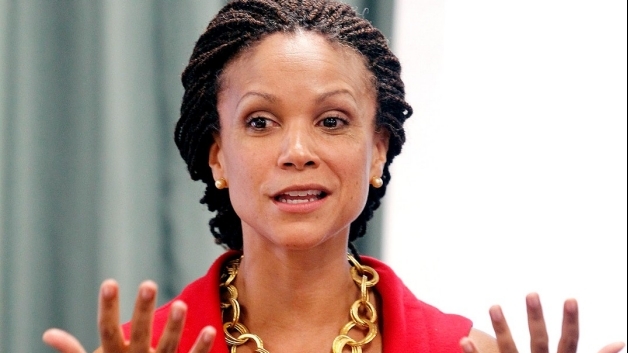
Obviously, this public discourse on the subject of women and their bodies is going in a direction that R’s would rather not go.  They continue stressing that this election is about the economy, jobs, jobs, and piles of jobs.  The folly of this attempt was summed up well by a panel of women on a recent Melissa Harris-Perry’s show on MSNBC:  to divorce women’s reproductive rights and access to health care from the economy doesn’t make any sense.  As Dr. Harris-Perry said: there is no way to get a job if you are constantly pregnant.

Taking the one divergent view, one of Melissa’s panelists, Monica Mehta, stated that she felt women should be more interested in jobs, her position being that once you have a  good job, you can argue with your leadership to obtain reproductive rights.  But wait, Ms. Mehta, we already did that.  How many more times will we have to do that?

As another panelist, Rebecca Traister, pointed out, the R’s seem to be in a time machine, lost in the days before women and minorities had access to political and economic power, representing women at their convention as symbols of “we’ve got some of those,” rather than having them speak about how an R presidency would continue or increase opportunities for women.  There wasn’t even a subtext that the government had worked for us before and it can continue to be a strong player in future efforts.  They seemed to be in denial that they worked in government jobs and they stood before the world based on opportunities created by the Civil Rights Act of 1964, the Voting Rights Act of 1965, Title IX, the Minority Enterprise Development Commission, and the EEOC, to name a few.  Of course, they would have to admit that these legislative efforts were all passed under D presidents, a fact they must avoid.  About their success, the speeches of Nikki Haley, Susana Martinez, and Condoleeza Rice suggested that “I built it,” or the tried and true “I pulled myself up by the bootstraps” dogma.

Ann Romney, of course, was an exception to the success in government/academia portrayed by the aforementioned female speakers.  If the other women represented the brains of the R sisterhood, Mrs. Romney represented the heart, making her subject “love,” in particular, love of family, devotion to children, and the way women sigh a little harder than men, an issue that none of us doubted.  I would have been interested in hearing just a note of self-awareness that she had it easier than most women in America, particularly the single parents, the working women, and those who didn’t marry as well as she.

In Dr. Rice’s defense, she did make a reference to surmounting her background in Jim Crow Birmingham, but she deftly sidestepped the issue of how government had paved her way by putting an end to legal racism and segregation.  Instead, she explained her success by her good luck in having parents who believed she could grow up to be president!   What I wonder is whether their belief was formed before or after the 1964 Civil Rights Act and the 1965 Voting Rights Act?   Doing the math, I see that she was born in 1954, and would have been 10 and 11, respectively.  Could her parents really envision her ability to reach the highest levels of our government before either of those?   But, she has to be coherent in a party that trumpets family values and ignore that its stated goal since inauguration day has been to rid the country of its first Black president, simply because he is black and believes that government creates opportunities for others like himself, along with women and other minorities.

Women aren’t needed on our national stages to be symbols that suggest other women can join them if they’d only work hard enough.  They are needed to help engage us in some inter-connected thinking.  As Irin Carmon of Salon.com noted during the panel discussion, these women should have pointed out that — while they can be role models — they are able to do this because of birth control and the ability to control when they start a family.  At the very least, they need to at least acknowledge that women are affected differently by parenthood and that it’s in society’s interest to recognize that fact.

I recall an elderly woman whose best friend had died recently.  I asked her when she and the deceased  had become friends.  She explained that she had met her through their kid’s school PTA and soon thereafter, her friend became pregnant with her fourth child.  Her friend didn’t have to worry economically, but she didn’t know where she was going to get the energy to handle another child.  Her friend lent her a shoulder to cry on and helped her cope with that pregnancy.

Just think how none of us, the female children and grandchildren of that generation have had to experience a body out of our control, instead, having the size of families we want, not what some angry white men want us to have.  Simply put, keeping us in the pregnancy lottery devalues all women and our contributions to the world beyond procreation.

If only Ann Romney had borrowed Chris Christie’s speech when he reported what his mother had said to him:  She told me there would be times in your life when you have to choose between being loved and being respected.  She said to always pick being respected.   As Aretha Franklin sings:  R- E -S- P- E- C- T, find out what it means to me.  You’ll find that it means one helluva lot to most women.

Posted in Politics, Women | Tagged , , , , , , , | 3 Comments

My Summer Hiatus

What’s a blogger to do when she needs a break from being a good read (my goal), creating controversy, and bringing back fond memories?  Taking a cue from television where even news magazines like “60 Minutes” and “CBS Sunday Morning” start re-airing old segments during the summer, the word “hiatus” came to mind.  But instead of reruns,  let me share some of the comments I’ve received in my virtual mailbox recently.

In response to Put Muny on the List, Mr. Kelso! I heard this from Peter Barbour, founder of the Save Muny organization:

I formed Save Muny in 2007 because I learned the game of golf there, but also because I remember the old Tarrytown – the one without traffic streaming down Exposition or Enfield or Lake Austin.  And, as I still come into Austin from time to time to visit my parents, I couldn’t see the point (greed) or the need (greed) to replace Muny with retail and 13,000 people.   Thanks for your words — and I wish you would share them with Kelso!  (I did, Peter.)

My old (but still youthful) friend, Tom, shared these thoughts about Muny:

Your article brought back a few, long-forgotten vignettes. . . playing in a 9-hole tournament when I was in 6th grade … playing with JR the first time I played 18 holes, trying to hit out of the mud on old No. 7, splashing a chunk of mud in my eye . . . Really, Muny is so woven into my youth that I play there once or so every year, just to see what has changed (like one hole that changed drastically, but then changed back to the way it always was). And in a strange way it seems a bit like I am playing a few holes with my 16-year-old self when I am there. There are better golf courses in town now, but you can’t get THAT experience many places. Not even for big money.

Jamie, who cruised around West Austin with me in my mother’s ’68 Mustang, but now lives about 200 miles north of West Austin, wrote this:

I recall that  my dad and brothers enjoyed it a lot when they used to play golf there.  I feel particularly called to arms about the need to protect my hometown of its few, and dwindling, green areas within the city limits.  Like you mentioned, they are  sources of oxygen in traffic-congested areas.  I care about the air I breathe, and, as a matter of fact, about the air YOU breathe also.

Another former Austinite, Bruce, plans to return to Austin when he retires, and writes about his hopes for the preservation of Muny:

Maybe it’s the old fogey in me resistant to change, but it would break my heart if they destroyed Muny.  I have such fond memories of the place dating back to early childhood. If they should decide to do away with it, I would hope they would have the good sense and decency to preserve it as green space. I know there would be tremendous economic (e.g. real estate development) pressure against that, but Austin being the place it is, I would hope the “greener” contingency would also be able to apply significant (and very loud) pressure.  Or maybe I’m dreaming . . .

Responding to the entry, Sweet Dreams, Sweet Soldiers about our fallen soldiers and a husband’s letter to his wife, I heard this from Stephanie in Colorado:

For some reason, this Memorial Day has meant more to me than others.  Who knows why . . . but I realize that I’m sitting here writing this to you because of the young men and women who’ve chosen to fight, and, unfortunately, die for our freedom.  Thank you for reminding me…

Thanks to Mandy, I feel less alone about being a “grumpy old woman.”  Here’s her response to the post Turning into a Grumpy Old Woman?:

There is one gripe that needs to be taken public:  Bicyclists who refuse to obey the traffic rules and the rules of general politeness.  How many times have you been stuck behind some idiot on a bicycle who slows all the auto traffic to a crawl, causing all the cars to be halted at a red light—but the damn fool bicyclist cruises through the red light?  Or what about the three cycling buddies who ignore the bike lane and ride three abreast in the car lane so they can chat? . . . I realize that my feelings are not politically correct in Austin.  And I seethe every session when bills are passed that create big fines for drivers who dare to get too close to the 2-wheeled perfect people. . . Additionally, the spandex outfits are horrible.  Even thin muscular people look terrible in them, and they are eyesores.  I’d rather see the “naked thong man” than some skinny guy in spandex and a helmet.  (Wow!  Hats off to Mandy for an idea that would make traffic waits more interesting!)

It was so good to hear from Gladys Longoria.  She agreed with my pet peeve concerning downtown street closures to accommodate foot races and added her grievance about parking meter policy changes:

I am a grumpy old lady about the many activities that are held in Austin –  especially the many races.  I sent a letter to a city council member a long time ago explaining the difficulty I had on Sundays getting to my church downtown (St. Mary’s Cathedral).  There are other locations out of town . . . why not use them and show respect for our city streets? My most recent letter was to our current mayor complaining about changing the meters in the streets around the churches from free on weekends to now making people pay to attend church.  It makes no sense to me to have to pay the city to go to church.  (May sweet Gladys, who served 33 years with the American Red Cross, rest in well-deserved peace.)

And finally, in regard to my interest in obituaries, Jack pointed out a recent obituary that he found deserving of the Mitt Romney Award for Insensitivity.  In the first paragraph of a very long obit, the deceased (and author, no doubt) effectively established that the well-off are different from you and me, as he thanked the “boys”who had served him so well:

The mariachis are still playing and his beloved bird boys are crying in the rain. Ocho-Ocho [the deceased] came by his nickname from his many hunting trips to the once tranquil dove shooting fields of northern Mexico that he loved so much, in and around the Rio San Diego Hunting Club outside of Ciudad Acuña, and at the No Le Hace Lodge in the San Fernando Valley where he established a very special relationship with his bird boys. . . . Waves of chants of “Viva Ocho-Ocho!” often went down the shooting line in honor of a particularly fine shot . . . At the end of the shooting, when it came time for bragging rights and cervezas were being shared, his bird boys always made sure his bag of dove was as full as any shooter’s bag.

Thanks, readers, for all your comments and reminders of what an interesting world we inhabit!  Back to my hiatus and a glass of vino while I watch the Olympics!

Posted in Old/New Austin | Tagged , , , , , , , , , , , | Leave a comment

Put Muny on the List, Mr. Kelso!!

Whenever a group of my former Austin High School ’71 classmates congregate, invariably we find ourselves comparing the old Austin (good) to the new Austin (bad).

Ben Wear

I remember a conversation a while back when a group of us were sitting around a table under the trees at a pizza place.  We were commenting on a recent opinion piece by the Austin American Statesman’s humorist John Kelso in which he poses a list of Austin places/things he thinks should be saved from the bulldozer.

In attendance was Ben Wear,  classmate and the Statesman’s transportation reporter, who had engaged in a mano a mano with Kelso years ago on the subject of an earlier Austin in dueling columns.  These columns were prompted by Kelso’s waxing about the Austin he discovered in the late 60s-early 70s, spurring Ben to offer up his own take of Austin during that period. While Kelso found Austin to be full of charm and great fun, Ben described Austin as a sleepy college town – pleasant enough, but a bit boring, with limited restaurant fare– chicken fried steak or Mexican food. After college, Ben had moved to Oklahoma City, which he found much more interesting than Austin.  With that, a follow-up column ensued wherein Kelso roasted Ben, questioned his sanity, and virtually yelled, “Get a rope!”

John Kelso

So, as we ate pizza and drank beer, it was suggested that Ben could reprise the duel by countering Kelso’s places-that-should-be-saved list.  Ben, we suggested, could point out the flaws in his list, all with high dungeon and great humor, of course.  But, on further reflection,  it was hard to quibble about much on the list except for the blue rectangles under the railroad bridge on South Lamar, which Kelso likes because they “give Austinites something to crab about other than the traffic.”  Most of the other places, e.g., the Poodle Dog Lounge, Dirty Martin’s, and the downtown Whole Foods, seemed pretty sensible inclusions.

As that idea fizzled out, Ben suggested he could take a different approach, maybe, by coming up with a list of places from the past we wouldn’t miss if bulldozed into history.  But that was a stumper.  All I could come up with was a block of warehouses on E. 7th that are pretty unsightly, but that and the rest of our offerings were not column-worthy.

Later that evening, as I continued to think about Ben’s ripe-for-the-bulldozer list, I came to the conclusion that this is what happens when you get older:  everything in the town you knew from childhood becomes special.  Virtually any and all places take up residence on your own personal Memory Lane — whether good, bad, or ugly, you just don’t want any more tear-downs on that lane.  It’s like aging body parts.  While I might not need them all anymore, I still don’t want to lose my original equipment.  I’ve bid adieu to a uterus and gall bladder, but as for the rest,  I’d like to exit the stage with as many as possible.

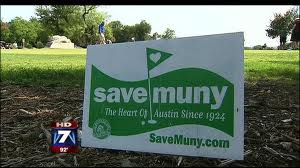
But back to saving Austin things, how about Lions Municipal Golf Course (also called Muny), known for being the first integrated golf course?   I admit that (pun alert!) links between Muny and me are fairly weak since I’ve only stepped foot on the course to serve beer at a tournament from one of its golf carts.  But Muny has  always been a part of my Austin.  Driving by the cool, green, tree-filled course in my younger years (which I did often coming from Westlake Hills to West Austin) I often wondered nervously whether a golf ball could possibly make its way over the fence and come sailing down on the roof of my mother’s car, which would not make her happy.

If the UT Board of Regents has its way, however, I might never get to experience that special kind of anxiety again.  The University, you see, owns the property, called the Brackenridge tract, and has already voted once not to renew the golf course lease with the City of Austin when it expires.  With the lease out of the way, the Board intends to let developers, salivating over the prospect, do their thing on the tract.

Whether or not you know the difference between a driver and a putting iron, there are important reasons (aside from keeping my past intact) to oppose this plan.  First, as an ardent tree aficionada, we should not be eliminating green spaces, this being one of the largest open green spaces in Central Texas.  This space functions as a living, breathing set of lungs on the edge of a city becoming more densely populated every day.  Think of it as a much smaller Central Park, removing carbon dioxide from the air and releasing oxygen every day, every hour, every minute. So, whether preserved as a golf course or a park, the tract is more valuable as an open space than somewhere to plant another shopping mall.

If you don’t care about large, oxygen-producing green trees (or the air you breathe), here’s another reason for you:  traffic.   As it exists now, the golf course draws a minimal amount of traffic since golfers must obtain tee times, before they drive over to play, thereby spreading the non-residential vehicular traffic over the day.   Some, if not all, of the proposed development projects would exchange open, tree-laden land for houses, buildings, parking lots, and cars. In other words, development would draw many more vehicles, whether the development is residential, commercial, or educational.  Whatever the project mix, much more traffic will be generated, conceivably at peak periods, clogging the small, single lane streets in the area.

As a resident of Southwest Austin, separated from West Austin by a river, you might question my interest in West Austin traffic.  Although I have the aforementioned environmental interest in green spaces wherever they exist, admittedly, my opposition to development on the Brackenridge tract comes with a component of self-interest.  Specifically, I’ve heard development proposals that are coupled with a request to the City or Texas Department of Transportation to reconfigure the interchange at Lake Austin Boulevard and Mopac to accommodate the projected increase of traffic to the tract.  Such accommodation would entail the creation of a giant and will-it-ever-be-finished construction project right where Mopac, Cesar Chavez, West 5th, West 6th, and Lake Austin come together.  In other words, we are talking about a royal pain in the derriere, particularly for downtown commuters.

Before the Board of Regents goes any further down the development highway, wouldn’t it be the neighborly thing to consider Austin’s existing transportation woes and UT’s contribution to Austin’s increasingly intolerable traffic?  Only two of the ten regents live here, so maybe most don’t realize (or care) that most days it seems as if all 50,000 UT students are on Austin roads, riding, biking, or driving.  Wouldn’t a good neighbor think twice (or maybe twenty times) before imposing any more traffic misery on this city that provides the infrastructure, the roads, the police and fire protection, garbage collection, and all the other city services that permit UT to fulfill its educational mission?

And, one more question for Mr. Kelso:  Why isn’t Muny on your list of places to save??!  I hope Ben Wear gives you some grief about that.

Ben Crenshaw at Lions

Read more about the Save Muny efforts and golfer Ben Crenshaw’s personal plea at http://www.savemuny.com/ben-crenshaw.html

Posted in Old/New Austin | Tagged , , , , , , , | Leave a comment

We, the People of the United Corporations of America…

It has become common to hear contenders for public office trumpet their experience in the business world as a significant reason for them being elected to government posts.  The rationale is that business people would bring a business approach to government, focusing on the bottom line, and eliminating all sources of “fat.”  He or she might even be able to lower your taxes once they get all that “fat” off the books!  Or so their reasoning goes.

But, isn’t it true that most of the time, FAT = JOBS ?  Ironically, bottom-line man Mitt Romney tries to convince us that he was actually a job creator despite the track record of Bain Capital.  At the helm of that private equity firm, Romney acquired and merged companies, loaded them with debt, fired employees, slashed vendors and disappointed customers.  In the end, Bain led certain enterprises into certain bankruptcy, while getting well-compensated for doing so.

None of this sounds like he holds the key to job creation.  But even to question Romney’s job creator claim is to invite shrill accusations by the Republican faithful and its network pundits that you are questioning capitalism.  To question the capitalist system as the best way to organize all economic activities equates to nothing less than treason and/or sacrilege.

But just because no one is supposed to question how Romney’s experience makes him a job creator, doesn’t mean that he and his support group aren’t allowed to criticize the President.  Since Obama isn’t a venture capitalist or former CEO, he is presumed ignorant about how the free enterprise works (subtext: he’s a socialist!).   No wonder, Romney crows, President Obama can’t fix the economy.

Frankly, I find it hard to believe that President Obama lacks understanding on economics, or any other subjects, for that matter.  (Okay, maybe he’s weak on the details of brain surgery, nuclear fusion, and the difference between mitosis and meiosis.)  After all, could someone so clueless about free enterprise also be a graduate of Harvard Law School (as president of the Law Review) and teach constitutional law for 12 years at the prestigious University of Chicago Law School?  And, even if there were some fine points he didn’t understand, the President regularly sits down with a team of economic advisers, a.k.a. the President’s Council of Economic Advisers, whose members, I’m sure, can explain things to him.

But more significantly, whether the President ran a business or not is not relevant to fixing the economy as a whole.   Like apples and oranges, there is a big difference between micro- and macro-economics, i.e., individual companies acting to maximize profits for  its shareholders versus the government acting in the collective interest of its citizens.   In the narrowly-focused, micro context (individual companies), the interest of the country’s economy as a whole – the public’s interest – is not even a factor they consider in their profit-making calculus.

And yet, citizens in this country are not allowed to question whether corporate profiteers like Romney would understand the concept of public interest.  As if permanently mired in the Cold War politics of anti-communism, we have silenced any criticism of capitalism, elevating corporations and their leaders to the status of prophets leading us to the promised land.  Profit-making, profit-taking, and the destruction of worker unions/rights and benefits are the new holy trinity of this religion called “capitalism,” in which the dollar is God and Wall Street is always deserving of salvation (unless you are Lehman Brothers).

Even the Supreme Court majority has been converted.  In a breathtaking sleight of hand (or mind), the court majority managed to sidestep the actual controversy in the case of Citizens United vs. FEC.  The question before the court was whether Congress can make different election spending rules for human beings than those for corporations as legislated in the Bipartisan Campaign Reform Act, known as McCain-Feingold.  But in this challenge, the Court ignored the issue about an even-handed (viewpoint neutral) regulation of corporations – whose very existence is a legal fiction created by the laws and regulations of the states – and made this a case involving speech of natural persons as protected by the Bill of Rights.  Voila!  Corporations are people, too!

And, shepherding this conversion has been a very elite group of corporate leaders whose compensation has skyrocketed, particularly in comparison with we-the-99% working stiffs.  In Paul Krugman’s 2007 book, Conscience of a Liberal, he compares incomes of Americans in 2005 (latest available at publication) to those in 1973.  He reports that in that 32-year period the median household income adjusted for inflation grew modestly: a total of 16 percent.  Looking at the wages of a specific group, 35 to 44-year old men who a generation ago would have been supporting stay-at-home wives, their inflation-adjusted wages in 1973 were actually 12 percent higher in 1973!  And yet, the Americans in the top tenth of a percent saw its income rise fivefold and the top .01 percent of Americans was seven times richer in 2005 than they were in 1973.  Krugman says, “A rough estimate is that about half of the wage income from this superelite comes from the earning of top executives – not just CEOs but those a few ranks below – at major companies.”  The incomes of sports and entertainment celebrities appear to account for the rest of the wage income of the top 0.01 percent, he reports.

And need we wonder why corporations get such largesse from Congress in the form of tax breaks, farm product subsidies, and other forms of corporate welfare?  When they have incomes among the highest .01%, a lot of influence can be bought and exerted.

Undoubtedly, American capitalism produces winners and losers.  But this country wasn’t founded to install and perpetuate an economic system that would produce a new aristocracy of privilege at the expense of the citizens who fight its wars, sweat in its factories, build its roads, and keep the machinery of capitalism humming along.   Capitalism should not be treated like a religion that cannot be questioned, analyzed, and fettered.  It is not ALL good.  Al Lewis explained that capitalism “also produces liars, cheaters, swindlers, self-dealing narcissists, overleveraged idiots, and reckless egomaniacs out to abuse their economic power and take unfair advantage of hard-working people . . . who cares how money is made, as long as its made in abundance.  Regulations, shareholders rights, class action attorneys, workers, the environmental an industrial accident victims be damned.  Tax the middle class.  Leave the rich alone.  The corporation is king.”

So, pardon me, Mr. Romney if I find your Bain Capital experience as a reason not to vote for you.  We don’t need some hard-nosed, bottom-line capitalist cutting the “fat,” when most of that fat involves jobs.  Real human beings are suffering throughout this country and your free enterprise-inhuman corporate model only works to further enrich those in your circle of superelites.

With his typical understated eloquence, President Obama recently explained the inaptness of Romney’s resume: “When you’re president, as opposed to the head of a private equity firm, then your job is not simply to maximize profits. Your job is to figure out how everybody in the country has a fair shot.”

We, the non-corporations of this country, need that fair shot!

Posted in Politics | Tagged , , , , , | 4 Comments

Sweet Dreams, Sweet Soldiers

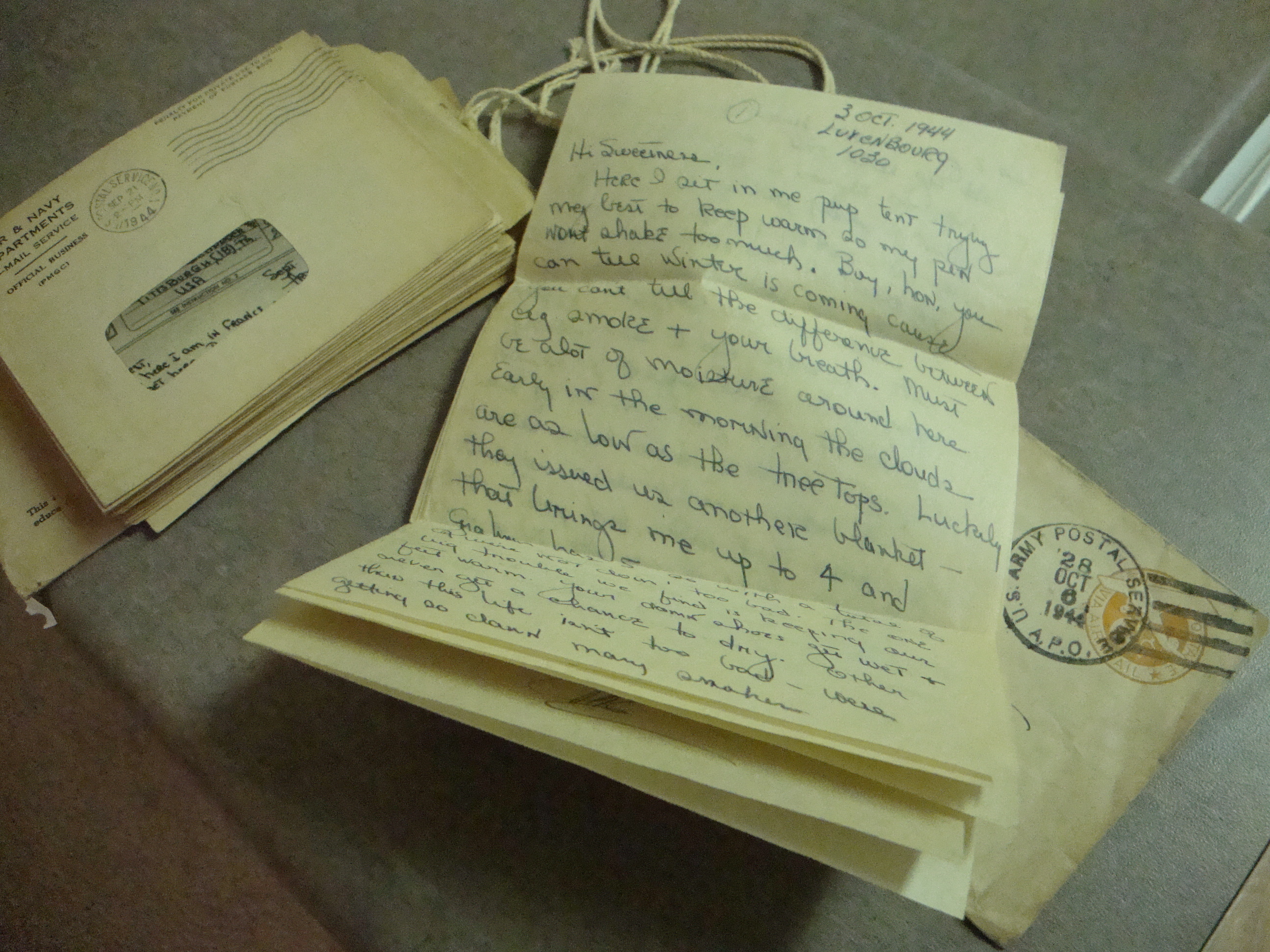
The official day of commemorating our war dead was this past Monday, but something this important is never untimely.  It was in the wake of Memorial Day this year that a friend and I were discussing his father’s death during World War II.  He told me that his mother had saved all of his dad’s letters to her, which he inherited when she died.  I made a comment like “It must be nice to read the actual words of your real father, in his own handwriting.”  When my friend asked whether I would like to see them — knowing of my intense interest in history —  I jumped at the chance to read a first person account.

Those of you who’ve watched Band of Brothers and other war dramas may find nothing remarkable in the letters, but it’s one thing to see a dramatic rendition on a screen and another to hold these heart-felt missives in my hand, knowing that once they had been in his and sent off with such high hopes of following them home someday soon.  His longing for home and his sense of disconnection from the life he had led moved me more than I could have imagined.  I realized, in short, how much I take for granted in my own life, like knowing I would never endure the winter cold of northern Europe while waiting for war to end — or to kill or be killed.

With his son’s permission, I’m sharing one of the letters of this young soldier as my way of honoring all of our fallen warriors in this week of Memorial Day 2012.  The following was written by a 23-year-old lieutenant to his wife on October 3, 1944, from Luxembourg:

Hi, Sweetness,
Here I sit in my pup tent trying my best to keep warm so my pen won’t shake too much.  Boy, you can tell winter is coming cause you can’t tell the difference between cigarette smoke and your breath.  Must be a lot of moisture around here.  Early in the morning the clouds are as low as the tree tops.  Luckily they issued us another blanket–that brings me up to 4 and G (tent mate) has 5 so with a total of 9 we’re not doin’ too bad.  The one big trouble we find is keeping our feet warm.  Your damn shoes get wet and never get a chance to dry.  Other than this, life isn’t too bad – we’re getting so damn many smokes in this area, it would take 1 every 5 minutes to burn them up.  I’ve still got the carton of Luckies I bought on the boat.  We’re getting plenty of roll candy from 10 in 1 rations – so you know with smokes for the habit and candy for my sweet tooth, I’m plenty happy.

They showed another movie yesterday, but I had seen it – The Miracle of Morgan’s Creek.  The guys went for it in a big way.  The only trouble with movies is it makes a guy think too much of home after it’s over.  Boy, when I get home, you are going to be the one to go up the street for the ice cream and beer – I ain’t setting a foot away from the kitchen, the fire-place, and the bedroom (just so you know you are still married to the same ole guy) – all I want is my wife and that little boy of ours – nothing more ever – (so, okay, we’ll have two or three brothers or sisters for Junior).

Speaking of Junior, guess he’s giving his mommy a royal bootin’ by now.  Give him a good talking to if he gets too frisky.  Tell him he’ll have to settle with his old man if he goes hurting his mom.

Hon, those hankies I asked you for back in France would come in handy.  It’s about impossible to wash anything so when you send any, just get cheap ones because when they get too dirty, we just throw them away.  If you haven’t sent those candles or flashlight, don’t bother with them – we can’t use any lights after dark.  As for presents, here’s a couple of Christmas items you could send: scarf and wool gloves.  We’re getting overcoats and galoshes so it look as if we’re going to spend the winter out here at the front.  They’re going to be mighty welcome, by gun!

This damn mail situation is really getting me down.  There are so many questions that remain unanswered.  A million and one things about you and the family . . . even down to how your mother’s hay fever is doing.  But one of these days Uncle Sam will fix me up with a whole bunch of mail.

Well darling, it’s lunch time and I want to get this letter out.  So for now and always, I love you, dearest, and miss you more than ever before.  Kisses to you and Junior,  ME

About five weeks later, this 23-year-old man would be killed on Germany’s western front.  He would never come home to kiss his wife and get warm by the fireplace.  He would never get to meet Junior, born almost a month after his death.

I’ll be thinking of this young father who sacrificed everything for many Memorial Days to come.  The saddest fact of all is that my friend’s father is far from unique.   War after war, thousands of other young men (and now women) continue to die for this country, with so many hopes and dreams falling prey to bullets and bombs . . . all blown to pieces.

Posted in Uncategorized | Tagged , , , | 2 Comments

What’s in a Name?

Kyler

Naming babies has been a hot news topic lately.  Maybe it’s the season, what with Mother’s Day and the rebirth of life that we associate with spring.   And while I’m no longer a potential mom with babies to name, I may be consulted (or allowed to comment) as I was with my grandson, Kyler, so it’s good to know the latest on the subject.  Also, I’m sure it won’t surprise you to know that a gal named Jeffee has a few opinions on the subject.

In naming news on CNN, I was surprised to hear that Jacob tops the list of boy names for the 13th year in a row.   If the name is so popular, why do I still envision a Jacob with a tall hat and long, floppy sideburns?   As for girls, Sophie moved to No. 1, supplanting Isabella, which moved down to No. 2.  I don’t have much reason to oppose the name choice of Sophie (despite it being a great name for a poodle), but are all those Isabellas destined to be called “Izzie?”  (Personally, I would hate that.  I can already hear cruel kids yelling out, “Fizzie-Izzie!”)

In keeping with the political season, NPR reported on a significant red state/blue state divide on names.  Ironically, more progressive communities favor more old-fashioned names, while parents in more conservative areas come up with more creative or androgynous names.  The reason lies in the age of the mothers.  Red state mothers are much younger and tend to be more imaginative than the women who wait later to have babies.

From a psychological perspective, journalist Faith Saile had a commentary on CBS Sunday Morning about baby naming and how names matter.  She advanced the concept of “name as destiny” and the research about children with “unfortunate” names having more problems in life including drug use, discipline problems, and failure to get job interviews.  She also cited to a recent poll on “name regret” showing that more than half of parents wished they had chosen a different name for their children.  (Maybe those red state mothers?)

Ms. Saile’s point that names influence who you become makes sense to me.  After all, have you ever met an Oscar who wasn’t a “perfect” Oscar?  While I’m no psychologist, it seems likely that the reactions of other people to a particular name, influences and shapes an individual’s personality in subtle but significant ways.  In other words, the child Oscar himself absorbs and incorporates the Oscar stereotype as he grows up.

Being named something unusual, I escaped the Oscar phenomenon; no one had any Jeffee stereotypes to apply to me.  But my name has presented me with certain challenges to overcome.  I remember many first days of school where I was  pre-seated in the boys section, if there was one, or in the middle of two girls if we were seated boy-girl-boy-girl. It was guaranteed to shine at least a sliver of extra attention on me that first day, attention that this painfully shy child had to learn to tolerate.

On the positive side, my name has always been a guaranteed icebreaker.  Upon meeting someone new, it has always given us something to talk about because, invariably, the first question is “Is Jeffee a nickname?”  And then “So, where did that name come from?”  I can then respond with the prolonged explanation that Great-Grandfather Gaddis (and presumably great-grandmother, Sarah Campbell Gaddis) wanted to honor southern Generals Jefferson Davis and Andrew Jackson by naming their third child, hopefully a boy, Jefferson Andrew.  Instead, the third daughter was named Jeffee Ann.   It wasn’t until their eighth try that my grandfather and only boy, Jack Campbell, blessed the Gaddis household.  Grandfather and grandmother Madeline would name their first-born daughter after great-aunt Jeffee, with middle name Kay.  When I came along — Jeffee Kay’s first-born daughter — it was decided that I’d be Jeffee Lynn in this short-lived family tradition.  Needless to say, by the time I’ve finished this explanation, the new acquaintance and I are old friends.

The biggest challenge has been one I still face.  Apparently, Jeffee and Jessie are impossible to distinguish on the phone.  I’ll carefully spell my name (specifying “f” as in Frank) but they will invariably say, “Okay, Jessie.”  I’ll stop them thus:  “No, it’s like the boy’s name, Jeff with two e’s on the end.”  That works only about half of the time.  For those who insist upon Jessie, I then ask whether they are familiar with the actor Jeff Bridges.  Since that generally rings a bell, I’ll walk them through the exercise of taking the first name of actor and adding two e’s to it.  Usually that approach will work, but it can be exhausting, particularly if you are just trying to make an appointment or phone in a to-go order.

Sometimes, I’ve gone so far as to choose an alternative for Jeffee, some name that is easily understood.  For example, at the sandwich shop near my office, when I mostly used the pick-up window, I was known as Jamie.  Eventually, I started going inside and interacting a bit more with the staff and had to come clean about my name.  It was a bit embarrassing to tell them I’d been lying about my name for so long.  Although they acted like they understood, I could feel them wondering, “What kind of a person does that?”

There is a whole other set of problems when you share the same name with another person you live with, in this case, my mother.  Unless you knew the caller, it was a time-consuming ordeal for me to respond to, “May I speak to Jeffee?”  But it was a real minefield for the caller:  Did they want old Jeffee or young Jeffee?  Big Jeffee or little Jeffee?  Jeffee Kay or Jeffee Lynn wouldn’t work because neither of us used our middle names outside the family.   My mother was probably more diplomatic at sifting through the callers than I was.  We eventually got separate phone lines.

Dagan & Dax

Needless to say, my two sons, Dagan (like Reagan) and Dax (like Max), were not named after anyone, although their names are sufficiently unusual that they often have to spell them.   They have managed to grow up  free of any preconceptions about what a Dax or Dagan should be or look like (see picture at right for a “perfect” Dax and Dagan).   Our parental naming efforts were rewarded when my older son told me that he was glad we had named him Dagan, because it made him feel special.  He said he liked the fact that he could use his one single first name instead of needing a last name like all the Matthews and Jasons at school.

So, as I write this on Mother’s Day, I am struck with the awesome responsibility mothers (and fathers) have in naming their children.  If the studies (and my instincts) are right, the single act of naming your newborn may shape his/her development as much as anything else parents do.  And just in case anyone ever considers naming their daughter Jeffee, I would advise them to choose Jessie instead.  It will be much faster and easier in the long run.  Not that I suffer from name regret.  As the sole Jeffee survivor in my family, I’m kind of like Elvis now.  No middle or last name needed!

Posted in Great Lessons, Women | Tagged , | Leave a comment

Comrades in Arms and Benefits

If more of us spoke French, I’d introduce my father, Eugene Palmer, as a raconteur, a great storyteller.  He qualified in this category by being around a long time, having many opportunities to meet a lot of characters, and possessing an appreciation and talent for public speaking.  Although I sometimes believe I’ve already heard his really good ones, I’m not sure anymore.  Either there are still new stories to hear, or they just sound new to me with my slipping memory.  For example, the other day, we were talking about a long-time friend of his, who’s a decade or so older than him, and I asked about his health.  Dad reported that, last he heard, his friend was still around and kicking.  In fact, he said, he’s probably getting ready for his yearly celebration of Hitler’s birthday.  I was surprised to hear this and responded (as any sane person would), “You have got to be kidding!”

But no, he wasn’t.  This friend, you see, is known to say, “If it weren’t for Hitler, I would have been making a living selling tacos in East Austin.”   But WWII came along, he was drafted, became a fighter pilot, and returned to Austin to graduate from college and law school on the GI Bill.   I guess gratitude takes various forms.

The subject of the GI Bill prompted me to bring up Lawrence O’Donnell’s promo for his show on MSNBC, which I described to him (since MSNBC is too liberal to make his watch list), O’Donnell explains how his father used his GI benefits as a World War II veteran to attend college, which enabled him to earn a living that allowed him to send his five children to college. O’Donnell ends by saying, “It’s the most successful educational program that we’ve ever had in this country — and the critics called it welfare.”

“So, as a recipient of GI Bill benefits,” I asked my conservative father (provocative child that I am), “did you consider yourself a beneficiary of government welfare?”

I’m not sure what I expected his response to be, but I was surprised when he said “No, but I was initially inclined to refuse the benefits because I didn’t feel worthy.”  Explaining that he had an easy time of it, while men he had trained with were dying in Korea, he tells the following about his military service:

I was a Speech major at SMU until I made the truly dumb decision to drop out of college at the end of my sophomore year.  That led me to being invited (drafted) to join Uncle Sam’s army.  The first stop was Fort Riley, Kansas for infantry basic training.   As we trained in 1952, the second year of the Korean Conflict, everyone was worried about being sent to Korea on a ‘one way ticket.’

One of my buddies was a guy named Jack Straus, a former basketball player at Texas  A & M.  One day, he and I were among several small groups firing live rounds from mortars.  We were among several assigned to the same gun and, at some point, got thirsty in the heat of the summer afternoon.  Our canteen water was warm, so we asked the drill sergeant for permission to go down the hill to the tent where the noncoms had cold water.  He suggested that might be a court-martial offense, to which Straus responded, ‘And how does that compare with Korea?’  The sergeant looked at us disgustedly and barked resignedly, ‘You college guys are all alike.  Just go get the water.’

When we neared the water tent, we heard an explosion and looked around to see many of the guys we were training with lying on the ground.  In fact, as we ran back, we could see that the very gun we had been firing appeared to have exploded, hitting fellow trainees for 20 to 30 yards away.

The first person we reached was our Field First Sergeant (who we didn’t even know was in the vicinity) lying on his back, moaning and bleeding from shrapnel to the groin area.   We whipped off our belts to make a tourniquet and bandaged as best we could with our handkerchiefs.  In his pain, the sergeant told us, “Boys, if you get me through this, I promise you guys will never serve a day in Korea.”

A few days later, it came time to get shots, and the whole company, including Jack and me, was sent to get Far East inoculations.  Of course, we figured the sergeant had forgotten.  But then, when everyone got their orders, the entire company, except for the two of us, was sent to Korea.  I was assigned to the German occupation army and Jack  remained at Fort Riley to play on the post basketball team.

After learning of our assignments, we went by the hospital to thank the sergeant.  We began by telling him that after being sent to get the shots, we figured that he had forgotten his promise to keep us from being ordered to Korea.  At this, he raised up on his elbows and bellowed, ‘Well, I can change the orders back if you want me to!!!’  We very quickly told him that we weren’t complaining and that we had come by to tell him just how thankful we were that he had remembered.  We were very, very grateful, we assured him.

Upon my arrival in Germany, the personnel placement officer saw that my last civilian occupation was as a radio announcer and told me that there were no openings in that field.  Instead, he thought he had information and education positions (involving research and public speaking), but I wasn’t too hopeful that this would work out, imagining that I’d arrive at an infantry division and find that such jobs were filled, resulting in placement in the walking infantry.

Instead, I was ordered to the 97th General Hospital in Frankfurt, a large, 1,000-bed facility, where I spent a relatively pleasant 16 months preparing and delivering talks to the hospital personnel.  I was ordered to present talks on an array of subjects that included U.S. government and civics, the Russian army, the black market in Germany, and venereal diseases.  Even while there was fear that the Russian troops, stationed in East Germany about 50 or 60 miles away would invade Frankfort and perhaps capture some of us, I knew other conscripts like me were battling and dying in Korea.

When I was released from active duty, therefore, I was reluctant to avail myself of the GI Bill to continue my education.  After all, the most dangerous episode I experienced was at Fort Riley in the aforementioned training exercise from which I was saved by a fortuitous thirst for cold water.  I discussed this concern with my fiancé’s wealthy uncle , Meyer Donosky, who basically gave me the 1950’s equivalent of ‘that’s just crazy talk,’ pointing out that I was just as worthy as many other veterans.   Benefits, he noted, were not offered on the basis of some level of suffering and sacrifice.  I finally decided to accept the government’s financial assistance to complete my undergraduate degree at SMU and obtain a law degree from the University of Texas.  So much for the radio announcing career that served me so well (along with some very good luck).”

As an interesting epilogue on good luck, he kept up with his buddy Jack Straus, who never played much more basketball after the war.  Instead, he made a living playing high stakes poker (a skill he undoubtedly perfected at Fort Riley) and won the World Series of Poker in 1982 and was known for successfully pulling off one of the best bluffs in the history of poker.

So, while my dad did not consider the GI Bill to be welfare, I’m sure there were many politicians then who sat on the sidelines and railed about the “dole” to GIs, just like there are those today who complain about anything with a scent of a giveaway (like veteran health care) — even though they have never served a day in this country’s military.  Guys like my father or his friend who throws the Hitler birthday party know that their own lives better, but more importantly, that this country is a better place because men such as themselves were able to get educations after their return from military service.

In conclusion, let me take this opportunity to warn him that I will feel free to use this information as ammunition next time he accuses me of being a socialist.  And come to think of it, he receives Medicare and social security.  So let’s just face the facts, Dad — we are all socialists now.

Posted in Uncategorized | Tagged , , , , | 2 Comments

Turning into a Grumpy Old Woman?

In recent years, I have tried to resign myself to gathering wrinkles and accumulating creaks in the knees with a sense of humor, aspiring to be one of those gracefully aging ladies I so often read about in the obituaries.  Reviewing some of my recent posts to this blog along with some of my comments on social media sites, I find my political observations to be as astute and enlightening as always, particularly regarding the war on women and general right-wing claptrap – but some comments sound more like whines and gripes. Confronting me was this disturbing question:  “When did I become a grumpy old woman?”  You may think it unlikely, but here’s some evidence of my possible fall into grouchhood.

For example, you hear me complain a lot about sound.  Yes, my hearing isn’t what it used to be, but I know other people with excellent hearing who agree with me about the acoustics at a certain performing arts center in this town.  It’s a shame because it’s the one where Broadway road shows and other plays are performed.  Moreover, not too long ago, big bucks were was spent to improve the acoustics – to no avail, as far as I can tell.

The decibel levels in restaurants can be unbearable.  So many eating establishments claim to specialize in food, but appear to be vying for serving up bedlam along with the chow.  It’s well-known that architects and interior decorators know how to reduce bouncing sound waves with carpeting, curtains, upholstery, acoustic tiles, soft surfaces in lieu of hard and smooth ones.  And yet, even upscale venues feature a cacophonous clamor as conversation and laughter bounce off concrete floors, glass, mirrors, and  metal decor.

And then there are the half hour of movie trailers at movie theaters, played in eardrum-busting surround-sound.  The purpose of the high volume, I’ve heard,  is to stimulate viewer adrenalin levels, which builds excitement about the promoted movie.  My reaction is more akin to “fight or flight” as I fumble around in my purse for my ear plugs.  For the same reason, live amplified music has lost its allure for me. If I can’t hear myself think, I don’t want to be in the sane room with a band and its amplifiers.

Another big gripe is air conditioning in overdrive.  I hate the fact that I must take a coat or jacket with me everywhere, all year round,  because most buildings, offices, restaurants, movie theaters, grocery stores, coffee chain stores, etc., run the air conditioning full blast, sometimes accompanied by ceiling fans!!!  Not only do my teeth chatter, but my food doesn’t like it either.  The kitchen staff can slave over a hot stove to prepare a dish of hot food, but cold blasts of air aimed at the table will chill the dish after just a few bites.  Don’t get me wrong, air conditioning in Texas is a blessing, but I’d almost prefer a few beads of sweat to slowly succumbing to frost bite in a veritable meat locker.  And what about waste not, want not?  Aren’t Austinites devoted to conserving energy?

And how’s this for grumpy:  What’s with the marathons, 10Ks, and other runs in the central streets of Austin?  Many times of day, negotiating Austin streets is arduous because our streets and thoroughfares were designed for a much smaller population and have failed to keep pace with growth.  Add to that issue the lack of a true mass transit option.  But the Austin powers-that-be seem intent on making it even more difficult to get around town.  On any given weekend, big swaths of the central city are closed so that sweaty people in gym shorts can run.  Run on streets designed for cars.  Run by buildings they do not intend to visit.  Run by residences that the owners cannot leave or access for hours.  Run by stores where they do not intend to shop.

I have nothing against running, it’s just where this running occurs.  Why not build a running course – like the bicycle veloway – somewhere out of town, maybe over by the Exposition Center?  Jazz it up like a miniature golf course and have these races amidst nature, under trees, around ponds and fake alligators.  Participants can still dress up, wear wigs, and engage in various antics — photographers will still show up.  Meanwhile, the non-running citizenry (the vast majority) who want to use our city streets for their intended purposes are not stuck in traffic waiting for a race to end.

And not far behind these running events are the festivals.  Austin has its traditional local events like the Zilker Kite festival, Zilker Garden festival, Fun Fest, Eeyore’s Birthday, etc. But local is so yesterday.  Austin is fast becoming a festival mecca for the country, if not the world.   Why are we promoting this??  Why invite 50,000 or so people to come live with us for a week or two despite the City’s inability to move the regular population around?  And it’s not just these festival weeks.  Too many folks who come for a week decide to move here because they come from somewhere really bad or they are deluded into thinking they will be able to park their cars somewhere downtown.  Austin is already adding population at the rate of about 4,500 a month, making it the city with the second highest growth rate in the nation.  So, are we vying for Number 1?  Why don’t we leave this Number 1 thing to the UT football teams?  It’s worked out so well for them.

So, those are my big issues.  There are many smaller ones, to be sure, like people talking on cell phones in public places, but even adding together the large and small issues, I’m not sure they necessarily add up to grumpy old woman status.  Instead, maybe they are simply indicative of a sensible person of indeterminate age who appreciates the finer things in life . . . like driving someplace for a pleasant outing without first devising plans equivalent to D-Day invasions to avoid the festival crowds and running events; actually hearing the spoken lines in a play for which I shelled out a small fortune; enjoying music or spectacle without having to wear ear plugs; and enjoying a dinner of good food seasoned with conversation at a normal volume in an environment that doesn’t require a my wearing a parka.

My younger self, a benevolent soul, has told me that she completely understands my frustration because she lived at a time when it was still possible to experience those finer things of Austin life. Given her encouragement, I think I’m going to steer clear of the grumpy old woman tag a little longer.  Instead, I should be considered as someone who loved a city that is irretrievably gone.  So, maybe I’m not a grumpy old woman . . . just a gal with a broken heart.  I can live with that and a few extra wrinkles . . . but just a few.

Posted in Old/New Austin | Tagged , , , , , , , | Leave a comment