
During a recent coronavirus briefing, Donald Trump gave a shout-out to Ghislaine Maxwell, wishing her well, as she sits in jail, charged with procuring young girls for a sex-trafficking ring, grooming them to be raped by influential men. “Why, why,” I hear decent people asking, “is Trump still this country’s president?”
The answer is simple. He’s supported by Republicans, both men, and, sadly, women. Some of these Rs are U.S. Senators, and earlier this year, these senators (with the Romney exception) couldn’t find their way to remove this president after he tried to obtain election dirt on Joe Biden, his most-feared rival, by bribing the Ukranian president. As if this were perfectly acceptable for a U.S. President to do! No doubt, they wouldn’t vote to remove him if he shot someone in the middle of Fifth Avenue.
Sadly, two of Trump’s most devoted enablers are from Texas, a state that in modern times elected men of principles at least twice – Lloyd Bentsen and Ralph Yarborough. And let’s go ahead and count L.B.J. as a third, despite the Ballot Box 13 incident. Now, Texas is represented by a couple of Trumpist toadies, one who is incurably obnoxious, the other, a bit more measured (which is probably more dangerous).
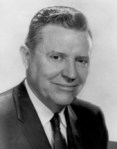
Ralph Yarborough

Lloyd Bentsen
The obnoxious one is Ted Cruz, of course, whose name will appear in the thesaurus as a synonym for that adjective one of these days. But I never expected Ted Cruz to be anything but a slimy, self-promoting weasel. During our coinciding stints of employment at the Texas Attorney General’s office, I can’t recall that a single positive thing was ever said about him, just many negative ones.
John Cornyn was another matter. As Attorney General, he seemed like a decent person, even if I didn’t agree with every policy and legal position. Many of the other assistant attorneys general agreed, finding him to be a Republican who hadn’t swallowed the Kool-Aid of rabid, knee-jerk partisanship. But, as Senator, he proved himself as a chameleon who became as power-hungry as so many other Republicans in Washington. Upon arrival, he didn’t just drink the Kool-Aid, he started chugging it.
As anyone who has been a regular voter understands, buyer’s remorse often sets in after a period of performance that fails to meet expectations. John Cornyn’s lapdog performance, standing next to Mitch McConnell, grinning and nodding while in support of Trump and his heartless policies, should be particularly distasteful for many buyers, especially considering that everyone thought he looked oh-so senatorial.
My opinion as a Democrat may not count, but I’m beyond ashamed by his political representation. Moreover, in the wake of the death of my own father, who never gave me cause to be embarrassed, I’ve often thought about the feelings of daughters with fathers who support this molester-in-chief. If I were one of John Cornyn’s daughters, I would be mortified to see him standing in front of the world voicing support for – or even tacitly supporting – a man who bragged about grabbing a woman’s genitals, as if they were playthings for his personal enjoyment. Few men get a national stage to be their daughter’s hero and tell the world that such behavior is despicable and no man should be “handling” anyone’s daughters. John Cornyn missed that opportunity. Instead, he stands shoulder-to-shoulder with a man who admits that he’d like to date his own daughter.
I also feel sorry for John Cornyn’s wife. Many of the same reasons apply. My husband’s embrace of Donald Trump would make me wonder who I’d been embracing during our long marriage. Every day I’d be wondering how he had surrendered the principles he seemingly lived by as a judge and Attorney General to serve as a yes-man for Donald Trump and Mitch McConnell, two men lacking any empathy or respect for the norms of fair play and decency. Living with a spineless spouse who supports a man who admittedly assaults women would be revolting.
And, I am saddened to think how being his mother would feel. It’s in a mother’s arms and at her knee that a man learns about unconditional love, good and bad, what makes a woman cry, what brings her joy. Often, her pride in him is the sole factor giving him the confidence to go out, take his place in society, and do well while doing good. Most sons seek to justify that pride. I imagine her disappointment as her once-commendable son shredded any patina of decency, supporting the head of a criminal enterprise, molester of women, and friend of sex traffickers (Jeffrey Epstein and Maxwell). I can imagine her sadly thinking, wherever she may be, “That’s not the son I raised.”
During this era of Trumpification, many of us toss and turn in our sleep, but it’s a wonder that John Cornyn can sleep at all, having thrown out his pride and that of his family’s and constituents like ballast from the little boat carrying him on his power-trip. Also tossed overboard are this country’s norms, institutions, and respectability in the world of nations.
If only we could elect Cornyn’s November election challenger, Mary Jennings (“MJ”) Hegar, an Air Force combat veteran and recipient of the Purple Heart, a daughter, a wife, and a mother.

She could help us wake up and recover from this national nightmare. She would have the guts to call out a man who assaults and disparages women, no matter what his position. And let me throw this out: she’d be one of the last people to allow Vladimir Putin to influence our election or put bounties on our soldiers’ heads. In short, instead of simpering in some corner trying to win favor with political masters, MJ has the balls to stand up and say, “No way!”
I will not insult all the good and decent men in this world by making some caustic comment suggesting that only women can right the wrongs of this world. But when our Senator is a man who can’t even lift up his own rifle at those wrongs, we need to give a strong woman our votes. Undoubtedly, MJ Hegar is better equipped to serve as our Senator than either of the men currently serving themselves in Washington.




















 Now and Thenadays